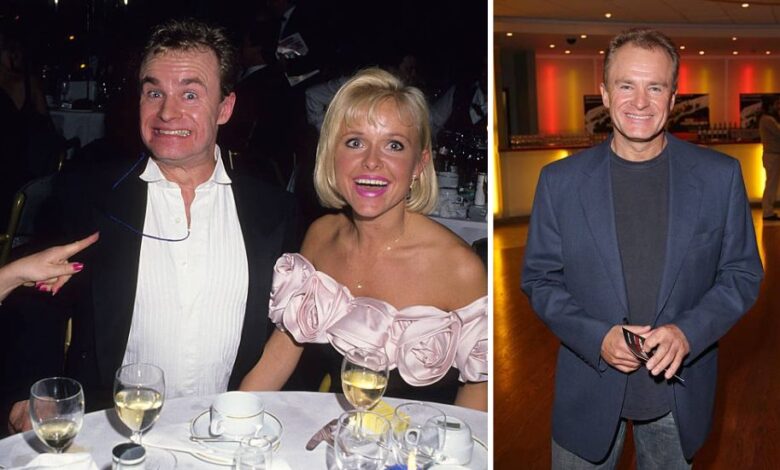
Trudi Jameson is a former British glamour model who rose to fame during the 1980s and 1990s, particularly known for her work as a Page Three girl in The Sun and appearances in top men’s magazines such as FHM, Loaded, and Maxim. Her striking beauty and commanding screen presence made her one of the standout faces in an era when glamour modeling flourished in the UK.
Beyond her modeling endeavors, Trudi Jameson stepped into television and entertainment, gaining minor roles and appearances in British pop culture staples. Her name, however, is perhaps most closely associated with her high-profile marriage to English comedian and actor Bobby Davro, which further cemented her place in the spotlight. Over time, she became a familiar face to the British public both as a model and as part of a celebrity couple in the UK media scene.
Trudi Jameson Career
Trudi Jameson’s modeling career began at a time when glamour modeling was a major avenue for young women looking to break into the entertainment industry. Known for her confident poses and radiant appearance, she quickly found herself featured on Page Three of The Sun, a launching pad for many aspiring models in that era. Her career took off from there, leading to widespread recognition.
Throughout the 1980s and 1990s, Jameson was a consistent figure in British tabloids and men’s lifestyle magazines, making her a household name in modeling circuits. She also branched into television, appearing in entertainment shows like The Word, The Big Breakfast, and Celebrity Squares. These shows, popular with youth and adult audiences alike, added dimension to her public image as more than just a model — she was an entertainer with presence.
In addition, Jameson took on minor film roles, including appearances in movies like The Krays and An American Werewolf in London. While these roles were not leading parts, they demonstrated her ambition to explore various facets of show business and diversified her portfolio.
Trudi Jameson and Bobby Davro
The romantic and later tumultuous relationship between Trudi Jameson and Bobby Davro captivated British tabloids for years. The couple reportedly began dating in the late 1980s and married soon after. Their marriage produced three daughters: Brittany, Tierney, and Marnie. For over a decade, they appeared to be one of the UK’s more enduring celebrity couples.
Bobby Davro, known for his energetic comedic style and successful TV career, complemented Jameson’s more glamour-oriented path. Together, they formed a media-friendly duo. Davro’s fame peaked in the 1980s and 1990s with television shows like Bobby Davro on the Box, Copy Cats, and later, his appearance on EastEnders as Vinnie Monks from 2007 to 2008.
However, behind the scenes, the couple’s relationship was reportedly rocky. According to Jameson, the marriage suffered due to Davro’s long working hours, emotional distance, and personal challenges, which led to eventual breakdown. Their divorce in 2003 followed a public scandal where Jameson was linked to builder David Rooney, a relationship that she began while still married to Davro. The affair made headlines and played a role in ending the marriage.
Despite the difficult divorce, both parties have remained involved in co-parenting their daughters. Over the years, they’ve occasionally been spotted together in public settings, particularly in relation to family matters. In 2021, Davro even stepped in to defend Jameson during an altercation outside a Surrey restaurant, showing that mutual respect remains between them despite their past issues.
Trudi Jameson Net Worth
As of 2025, Trudi Jameson’s net worth is estimated to be around $3 million. This estimate takes into account her earnings from a flourishing modeling career, television and film appearances, brand promotions during her peak years, and a probable divorce settlement following her separation from Bobby Davro.
Though she retired from modeling and public life years ago, Jameson likely secured substantial financial assets during her career. By choosing to maintain a low profile after her divorce, she may have also invested in her private life and ensured her financial stability.
Bobby Davro Net Worth
Bobby Davro, her former husband, also boasts an estimated net worth of $3 million as of 2025. His fortune is largely built upon a long-lasting television career in Britain. His variety shows in the 1980s, participation in game shows, stand-up comedy acts, and his soap opera stint in EastEnders all contributed to his financial success.
In addition to television, Davro also found success in live performances and pantomime, a staple in UK entertainment. Over the years, he remained a prominent figure in British showbiz, frequently appearing in stage productions and comedy gigs across the country. His legacy as a veteran comic has helped sustain his value in the entertainment world.
Life After the Spotlight
After her divorce and the end of her public career, Trudi Jameson stepped away from the media. Very little has been publicly reported about her in the years following her separation from Davro. She has focused on raising her children, preserving privacy, and avoiding the publicity that once defined her.
This shift to private life may be surprising for someone once so involved in high-profile modeling and media events, but it also represents a common trajectory for celebrities who choose peace over paparazzi. While Bobby Davro continues to occasionally grace the public stage, Trudi Jameson has found solace in anonymity.
Public Perception and Legacy
Though not as prominent today, Trudi Jameson remains a figure of interest due to her past modeling fame and relationship with Bobby Davro. In many ways, she is part of a generation of women who pioneered visibility for glamour models in mainstream British media. Her appearances on Page Three and other platforms came at a time when such roles were gaining both popularity and controversy, marking her as a notable part of UK pop culture history.
Her marriage and eventual divorce from Davro added a layer of tabloid drama to her public identity, which she has since left behind. However, the story of Trudi Jameson is not just one of fame and scandal — it’s a story of reinvention, resilience, and retreat from a world that often demands constant exposure.
The Jameson-Davro Children
Little public information is available about Trudi and Bobby’s daughters, as both parents have taken steps to protect their children’s privacy. However, some reports suggest that their daughters have led relatively normal lives away from the limelight. This speaks volumes about Jameson’s priorities post-fame — choosing motherhood and stability over continuing public exposure.
Final Thoughts
Trudi Jameson’s journey from the pages of The Sun to the quieter corners of domestic life represents a full-circle moment in the life of a public figure. She enjoyed fame, navigated scandal, and chose to withdraw with dignity. For many who followed her career or saw her alongside Bobby Davro, she remains a familiar face from a bygone era of British entertainment.
Though she no longer seeks the spotlight, Trudi Jameson’s impact, particularly in the 80s and 90s modeling scene, remains undeniable. Her story reminds us that behind every headline lies a personal journey filled with complexities, choices, and transformation.
This article was brought to you by Mating Press, your go-to source for in-depth celebrity biographies and entertainment insights.